


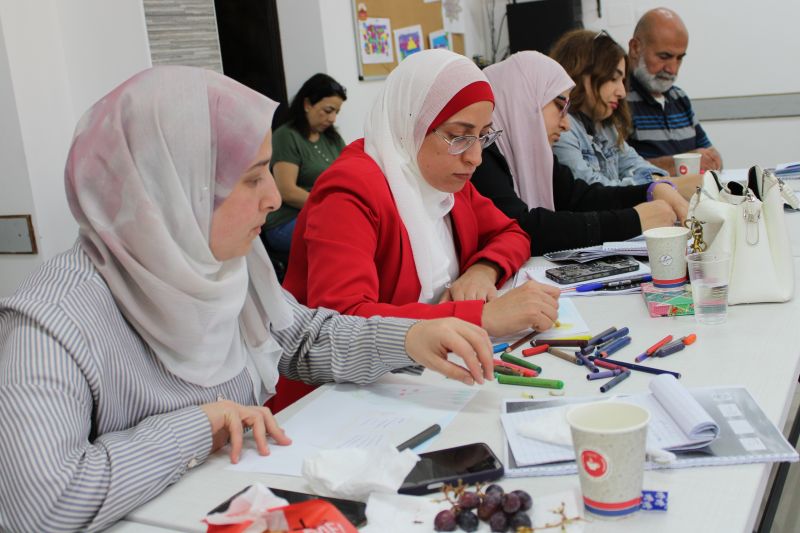
We have been training trauma specialists together with our partner organization in Palestine since 2006. During seven rounds of training, we have so far been able to certify 140 people who use what they have learned in their work with severely traumatized people. A new round of training began in April 2025.
Commitment Under Difficult Conditions
We are on the second day of the trauma training in Bethlehem. This is the second module that the group spends together. In the opening round, everyone can briefly report on how they are doing. What is being differs a lot. One participant says: “I didn’t think yesterday that I would be able to be with you again today. On the way home I was stopped at the checkpoint, had to get out and wait. It was cold, so I tried to move a bit. The soldiers shouted at me to stand still. Only after more than an hour was I allowed to continue.”
Another participant says: “I’m not feeling well today. My cousin was arrested last night. The soldiers searched the whole apartment and destroyed it before taking him away. We are very worried.”
In addition to many burdens and great worries, joyful experiences are also shared time and again, such as a child passing an exam. Moments like these show how important it is to find resources to help deal with stress, even in difficult times. One of these resources is humor, which makes the unbearable easier. After the colleague talks about his experience at the checkpoint, a participant says with a smile: “If you did some exercise there, you burned a few calories. I’m sure that’s good for you.”
Stabilization as a Central Resource
This module focuses on the topic of stabilization. The group works in a concentrated manner and tries out different methods. We practise how we can regulate stress and emotions with physical exercises and breathing. Imagination work is a central element: how can we use our imagination to anchor positive images in our brains alongside the images of horror?
An important exercise is to imagine a safe inner place. One participant reported on the fourth day: “Yesterday at the checkpoint, I used my safe inner place. That made it easier.”
For many participants, the seminar is not only professional training, but also personal empowerment. One of them summed it up at the end: “We are so actively involved because the seminar content affects us on both a professional and personal level. We take away a lot of strength and new responsibility from these days.”
Martina Bock


