


Bosnia and Herzegovina is a country that is still marked by the consequences of the 1992-1995 war . This can be seen in economic terms, but above all in social coexistence and in people’s mental health.
The political system is still characterized by deep rifts and tensions between Bosniaks, Bosnian Serbs and Bosnian Croatians. The authority to interpret the events of the war and the associated assumption of responsibility for the terrible war crimes are controversial. This prevents people from coming together and the reconciliation that is so necessary for the future of the country.
In order to achieve stability, collective and individual traumas must be dealt with. This is where our work comes in.
Our Partner Organization
In Bosnia and Herzegovina, we have been working with Udruženje za psiho-socijalnu podršku i bolju budućnost “Progres “, the Association for Psychosocial Support and a Better Future “Progres”, since 2010.
Progres is involved in multi-ethnic encounter work, trauma-centered training in the educational and social sectors and psychosocial support for people with traumatic experiences. Progres helps young people, regardless of religion or ethnicity, to network, remember the past and work towards a non-violent society.
Contact Us

Further training for teachers in trauma education
We turn schools into trauma-sensitive places.
In Bosnia and Herzegovina, we observe that the consequences of individual and collective trauma are often not recognized as such. Many children and young people suffer from the trauma of their parents, which sometimes manifests itself in domestic violence.
At the same time, past experiences of violence continue to have an impact in schools. In some regions, for example, the principle of “two schools under one roof” still exists today, i.e. separate schooling for pupils of different ethnic backgrounds in the same school building. In this way, ethnic segregation is passed on to the next generation. Reconciliation and healing remembrance have no place in this system.
The project
Schools and classrooms should be trauma-sensitive places where children and young people can experience safety, self-efficacy and community. For this reason, we train teachers and people from social professions in trauma-sensitive support for pupils.
In six modules, they learn the basics of psychotraumatology and methods of trauma pedagogical work.
Parallel to the training, they can try out what they have learned in their work. “During the professional training, I learned that it helps to network with others,” says one participant, summarizing her experience. “If we draw attention to the importance of the issue of trauma and don’t ignore it, then we have a new opportunity for the future.”

Training young dialogue facilitators
We accompany young people in their commitment to peace and dialogue.
Social coexistence in Bosnia and Herzegovina continues to be characterized by tensions between the population groups. In order to understand these conflicts, it is important to deal with the issue of trauma.
The effects of collective trauma can be seen in collective attitudes and in the development of trauma-based group identities. Individual and collective traumas are used to maintain enemy images and fears. Victim and perpetrator narratives become identity-forming, own guilt and shame are suppressed.
In order to enable dialogue between different population groups, it is important to recognize these consequences of collective trauma and to work on a culture of remembrance that promotes reconciliation rather than division.
The project
Together with our partner organization, we have been working on these issues with young people from all communities in the country since 2021 and training them to become multipliers for trauma-sensitive dialogue.
In six modules, they learn to question traditional narratives and engage in dialogue.
“I take a lot of courage and hope with me. I never thought I would be able to talk to others about all these things. But I can – and that gives me courage“, says a young participant. After the professional training, the young people implement small local projects and thus spread the message of peace.

News Bosnia and Herzegovina
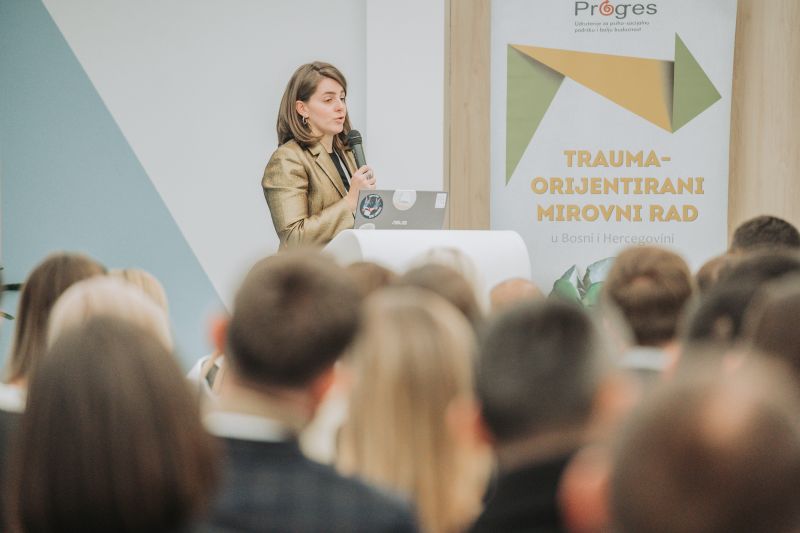
One Year Later: Civil Society in Bosnia and Herzegovina in a State of Permanent Crisis
5. March 2026
March 5, 2026
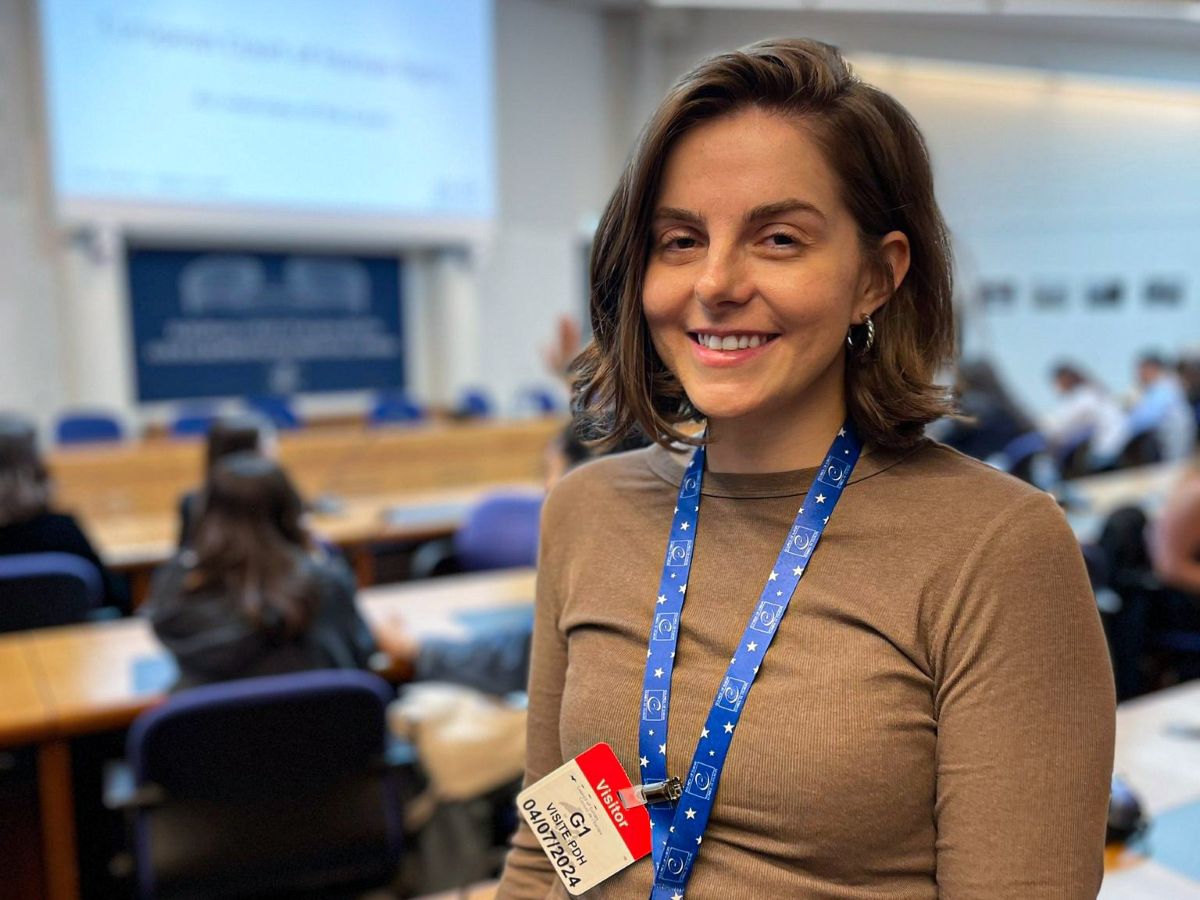
“Our Message Must Be Stronger Than the Call for Division” – Azra Frlj on the Situation in Bosnia and Herzegovina
7. May 2025
May 7, 2025

Hope After Trauma: How Teachers in Bosnia and Herzegovina are Building Bridges
18. November 2024
November 18, 2024


